


OUR CONTRIBUTION TO THE SDGs

SDG 2: ZERO HUNGER
End hunger, achieve food security and improved nutrition and promote sustainable agriculture
University Educational and Production Greenhouse
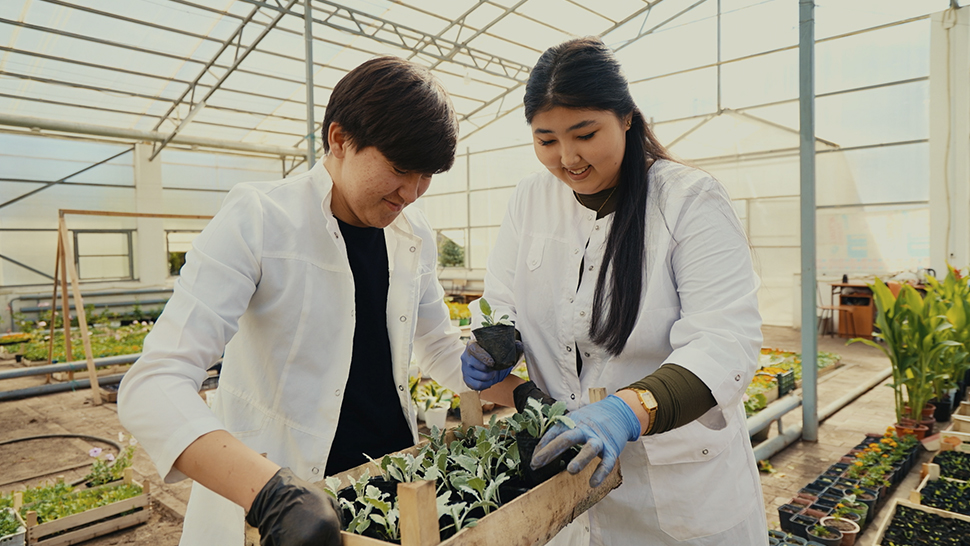
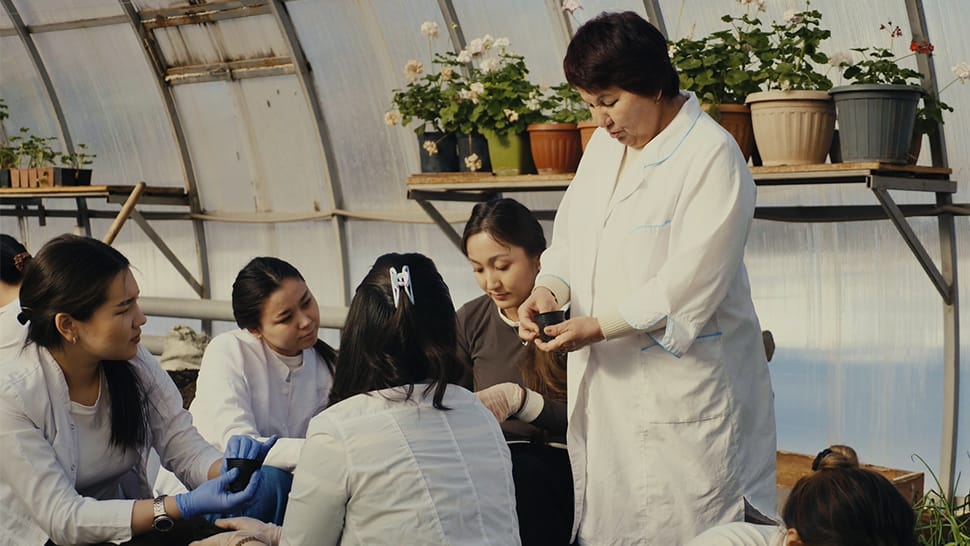
In 2020, an educational and production greenhouse was commissioned on the initiative of the University management. The greenhouse is used for educational and socio-environmental purposes. It operates under the Faculty of Natural Sciences and is actively involved in the learning process, providing practical training opportunities and helping students develop applied skills in plant cultivation and sustainable agriculture.
The greenhouse cultivates various types of leafy greens and ornamental plants, including arugula, cilantro, parsley, dill, lettuce leaves, spinach, as well as different flower species.
The cultivated products are sold to university staff at an affordable social price, with payments made directly to the official university account.
The greenhouse’s activities are aimed at promoting a culture of rational nutrition, improving access to fresh green produce, fostering environmental awareness, and supporting the principles of sustainable land use across the university campus, which covers approximately 13 hectares.
Scientific Partnership in Sustainable Agriculture
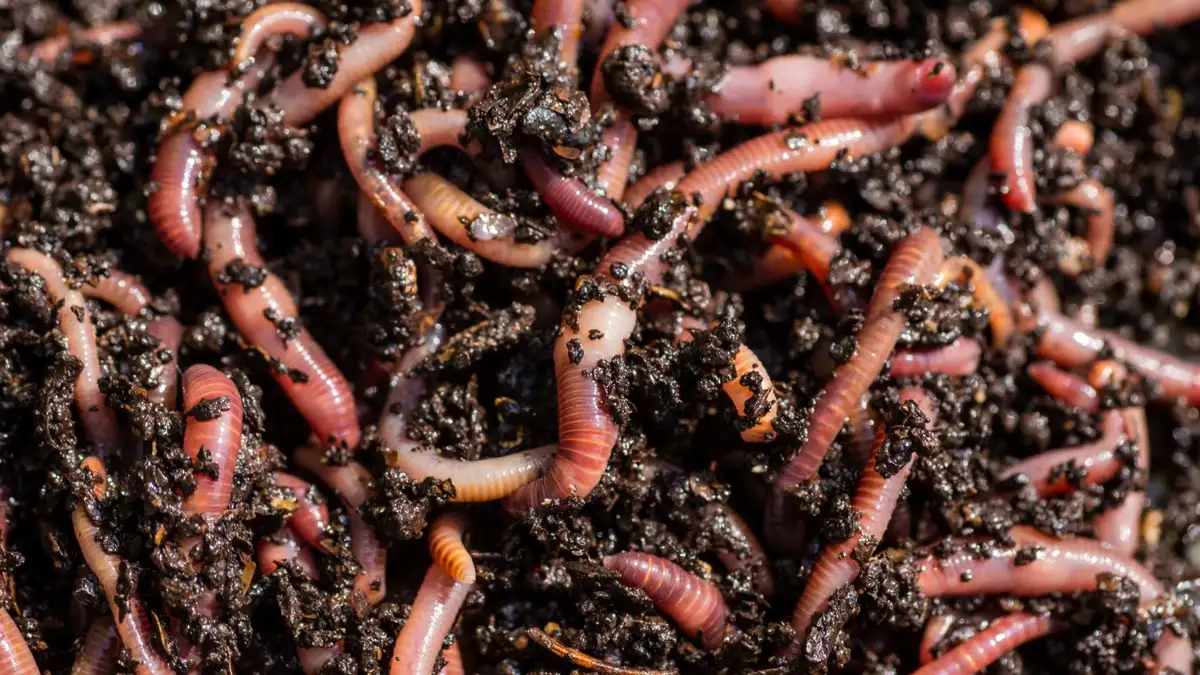
The University carries out scientific and methodological support for the efficient breeding of Californian worms (Eisenia fetida) and the production of valuable organic fertilizer — vermicompost (biohumus).
This cooperation is implemented within the framework of an economic agreement with the private farm “Zhana Tau”, aimed at developing environmentally friendly agricultural technologies, improving soil fertility, and promoting sustainable agricultural practices.
Community Support & Charity Initiatives
Zhubanov University actively promotes a culture of social responsibility and volunteerism among students. Throughout the academic year, students and staff regularly organize charitable initiatives aimed at supporting socially vulnerable groups in the community.
On the eve of the New Year, university volunteers visited the “Qamqorlyq” Children’s Rehabilitation Center, bringing festive cheer and presenting gifts to children with special needs. The initiative was supported by the University Trade Union Committee.
In addition, the Faculty of Economics and Law organized a charity fair, where students and lecturers prepared handmade products and food items. Funds raised during the event were directed to charitable purposes, contributing to the development of compassion and civic engagement among youth.
Students of the Professional and Creative Faculty also took part in community outreach activities by providing social support to elderly citizens living alone, delivering essential food supplies and offering emotional companionship.
Campus Catering and Food Accessibility
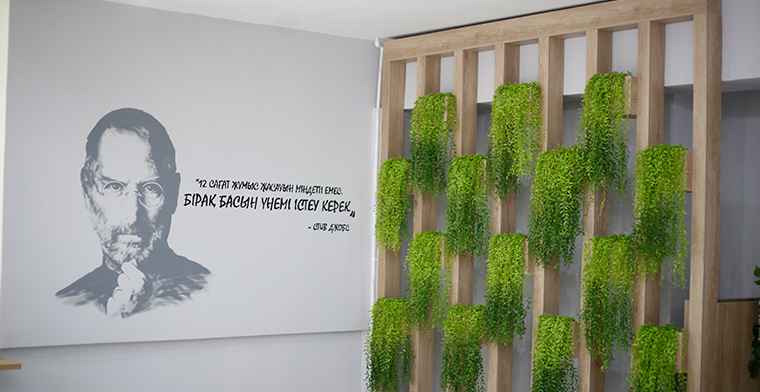

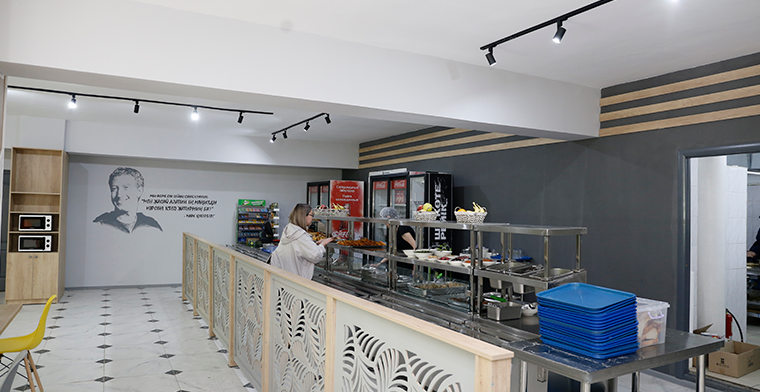
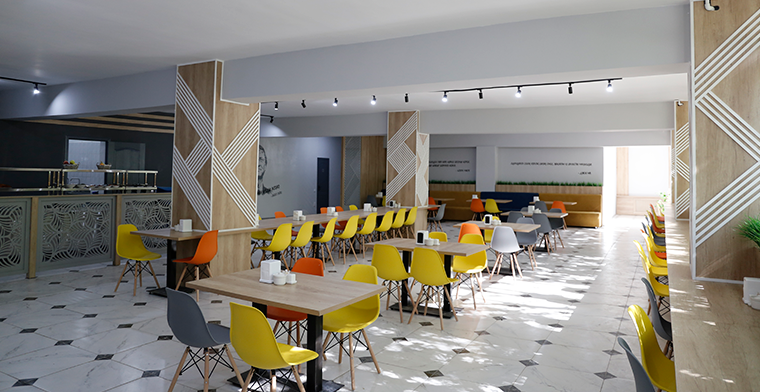


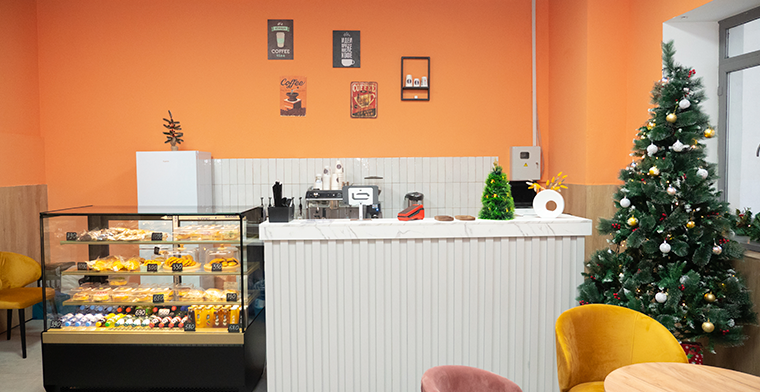
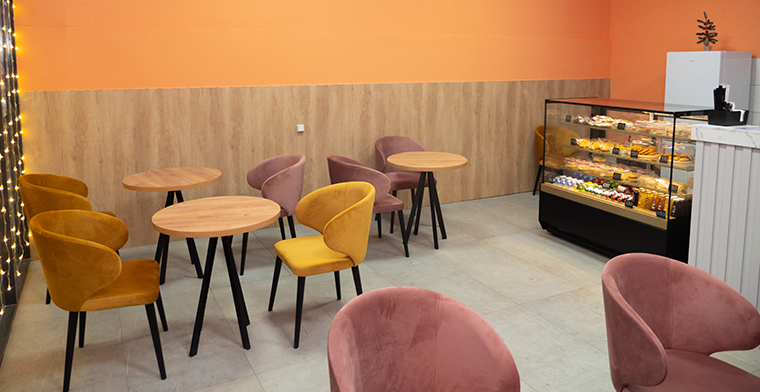
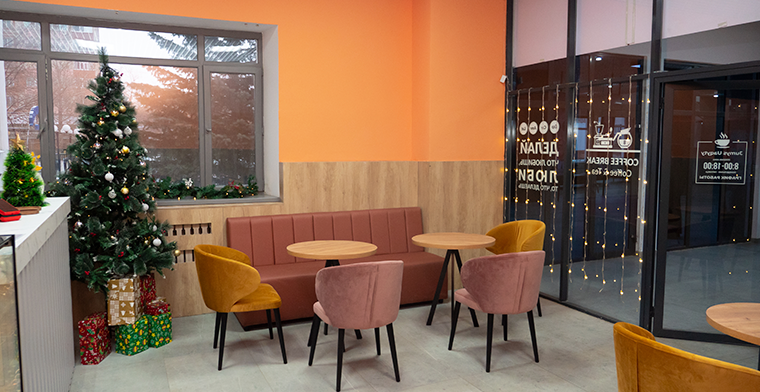

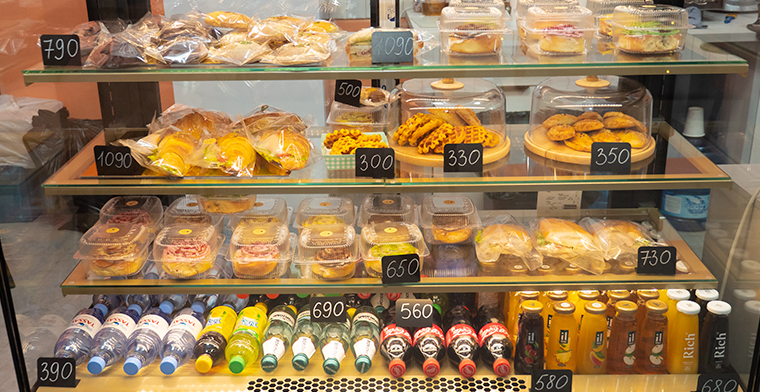

The University provides a well-developed campus catering infrastructure to ensure access to food services for both students and staff.
There are several coffee points and university canteens operating across the campus. Each academic building is equipped with a dining facility that offers affordable hot meals and refreshments throughout the day.
In addition, all student dormitories are equipped with fully furnished shared kitchens, allowing residents to prepare their own meals in comfortable and safe conditions.
This system contributes to improving student well-being, promoting healthy eating habits, and ensuring equal access to food services within the university environment.